Abstract
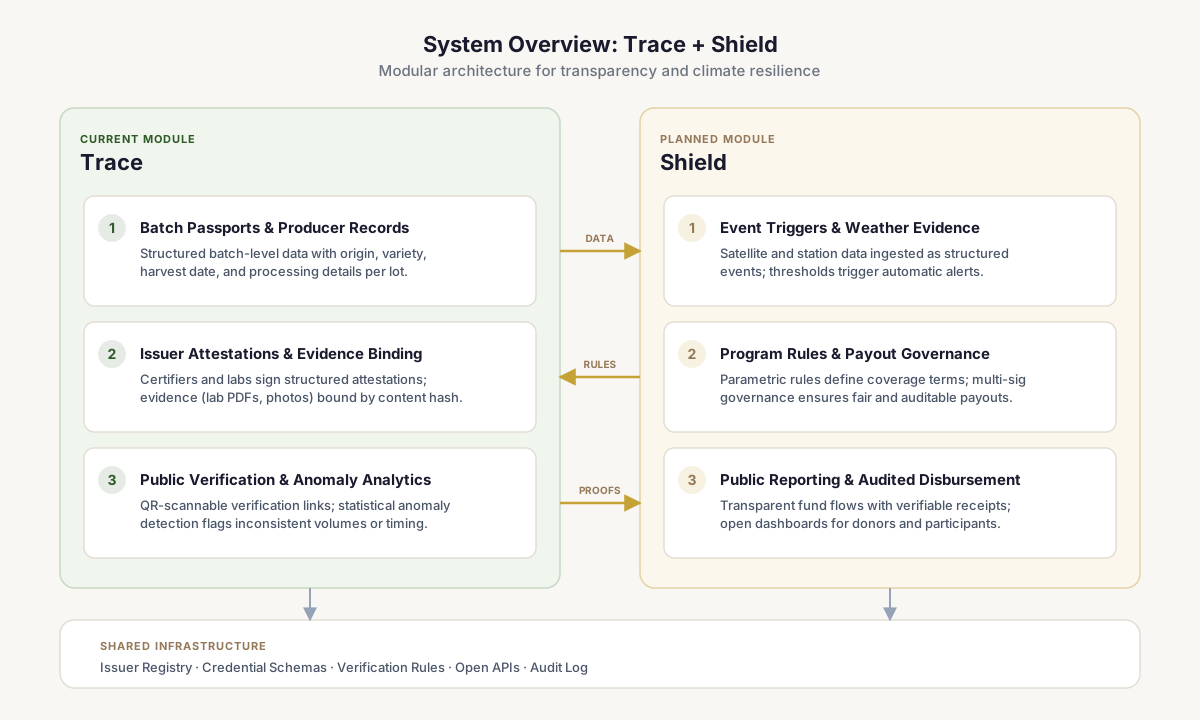
Terroir is open infrastructure for agricultural supply chains where product value depends on origin. Trace, its first module, creates verifiable batch passports and public verification records backed by multi-party attestations. Shield, the planned second module, extends that same evidence layer into climate-triggered response workflows for smallholder and family-run producers. (Digital Public Goods Alliance, 2025; UNDP, 2024)
The architecture works for any origin-sensitive agricultural product (wine, coffee, olive oil, honey) wherever counterfeiting, fragmented records, and climate exposure converge. Georgia's wine sector is the first pilot because it has everything a test case needs: protected appellations, documented counterfeiting, cross-border exports, and an institutional quality-control system that already produces certifiable evidence. (National Wine Agency of Georgia, 2025; Sakpatenti, 2018a; Banstola et al., 2025)
Provenance and resilience belong together. Trace ships first because cross-border trust failure is the most pressing problem. Shield follows once the evidence layer works, because parametric climate response without trusted enrollment and governance just creates disputes. (World Bank, 2022; Banstola et al., 2025)
The Trust Problem in Origin-Sensitive Agriculture
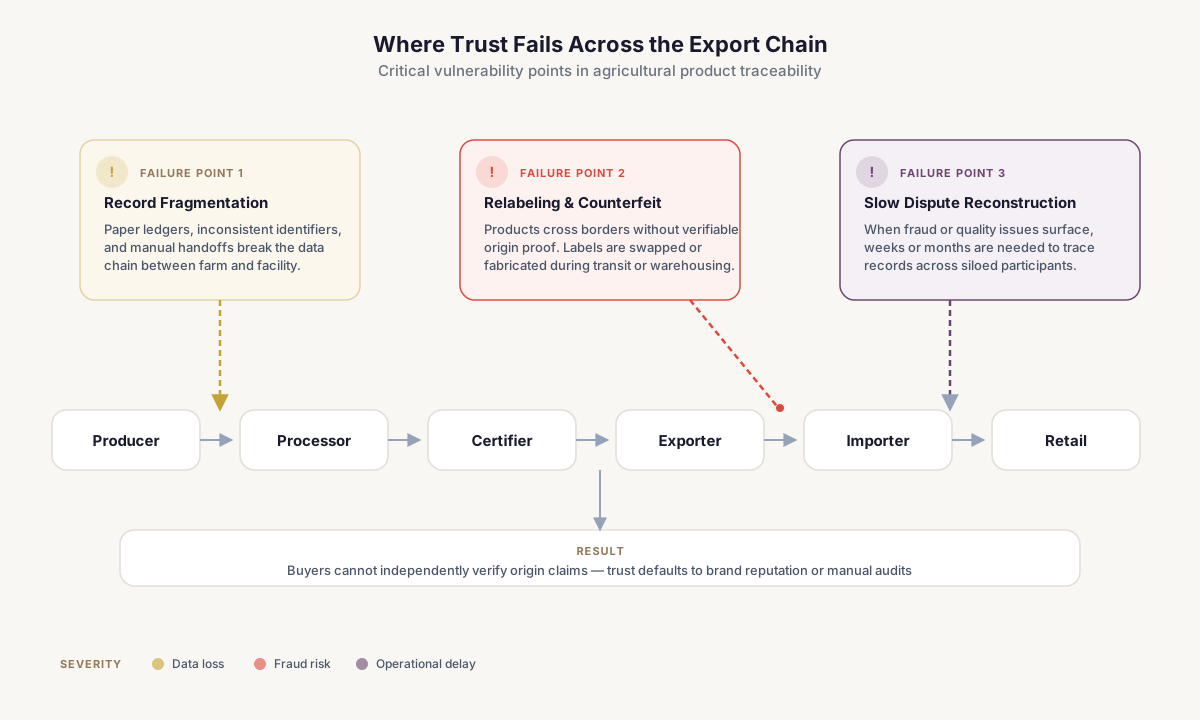
Agricultural products with origin-based value, such as appellations, geographical indications, and single-origin designations, fail in international markets when evidence fails. The product itself might be excellent. But when the records linking it to its place, producer, and handling history fragment across paper certificates, siloed databases, and manual customs checks, counterfeits and relabeled goods slip through. (OECD, 2022; OECD & EUIPO, 2025)
Climate makes it worse. Hail, frost, drought, and emergency support programs all need to know who was affected, where, under what rules, and how decisions were made. A resilience workflow without auditable evidence is just manual discretion moving faster. A provenance workflow without climate awareness leaves producers exposed to shocks that undermine quality and continuity. (MEPA, 2023; World Bank, 2022; Moriondo et al., 2024)
Section evidence: OECD, 2022 · OECD & EUIPO, 2025 · Sakpatenti, 2018a · MEPA, 2023 · World Bank, 2022 · Moriondo et al., 2024 · National Wine Agency of Georgia, 2018
Terroir: What It Is and Why It Exists
Terroir is an open infrastructure layer for agricultural products whose economic value depends on trusted identity. Wine, coffee, olive oil, honey, spices: any product where origin commands a premium and counterfeiting erodes it. Not a marketing tool. A reusable architecture for provenance, verification, and auditable resilience. (Digital Public Goods Alliance, 2025; UNDP, 2024)
Why start with Georgian wine
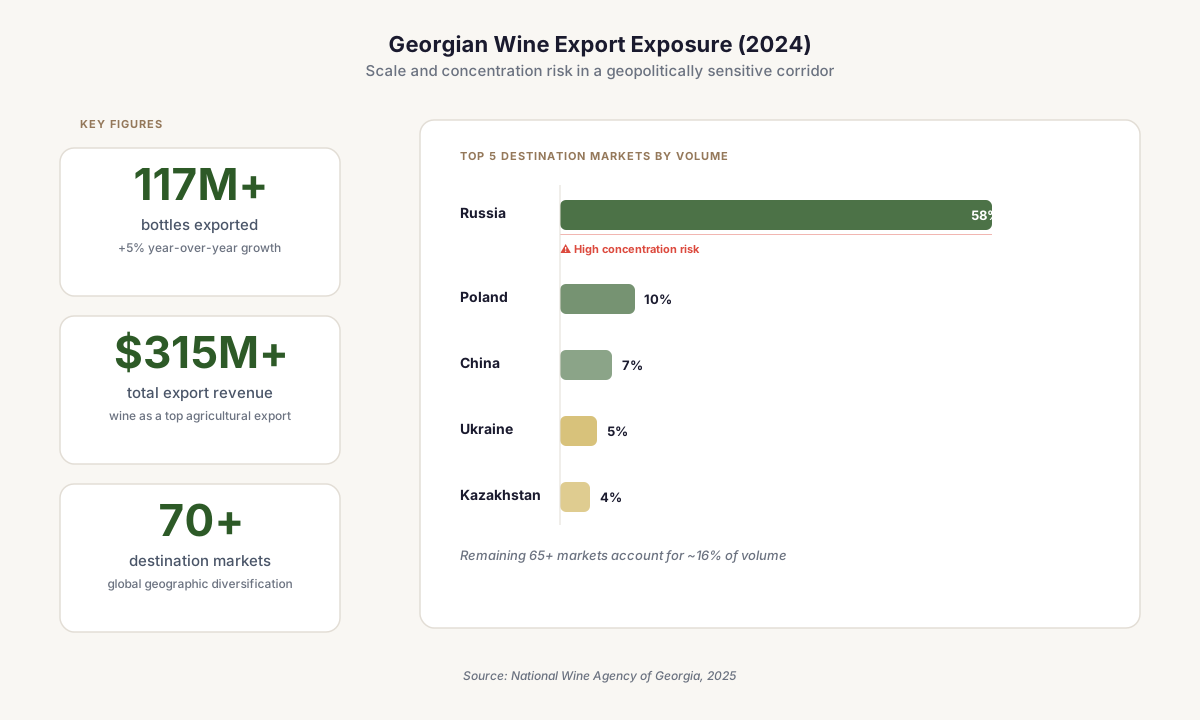
Georgia has one of the oldest wine traditions on earth, UNESCO-recognized qvevri practice, hundreds of indigenous grape varieties, a legal GI regime, and documented cross-border counterfeiting cases. More importantly, the state already runs lab workflows, vintage accounting, and quality-control systems that produce real certifiable evidence. Trace plugs into institutions that already issue meaningful data rather than inventing parallel bureaucracy. (National Wine Agency of Georgia, 2025; National Wine Agency of Georgia, 2023; UNESCO, 2013; WIPO, 1999; National Wine Agency of Georgia, 2020; Sakpatenti, 2018a)
Two layers. Trace is the provenance engine (batch passports, issuer attestations, public verification), ready for pilots now. Shield is the planned resilience extension that uses weather events, eligibility records, and public reporting to make climate-triggered support faster and more auditable. (World Bank, 2022; Rural Development Agency, 2025)
The economic logic: when a producer exports into a market where origin and quality signaling drive pricing, any ambiguity around authenticity becomes a tax on the honest actor. Some of that shows up as direct counterfeiting. The rest shows up as slower customs clearance, harder distributor onboarding, and more manual disputes. Trace reduces that friction, but only if it respects time. Batch registration at bottling or shipment events, reusable evidence templates, open APIs that don't force downstream partners to change their systems. (National Wine Agency of Georgia, 2025; OECD, 2022; Banstola et al., 2025)
Section evidence: Digital Public Goods Alliance, 2025 · UNDP, 2024 · National Wine Agency of Georgia, 2025 · Banstola et al., 2025 · UNICEF Office of Innovation, 2026 · National Wine Agency of Georgia, 2023 · UNESCO, 2013 · WIPO, 1999 · National Wine Agency of Georgia, 2020 · Sakpatenti, 2018a · World Bank, 2022 · Rural Development Agency, 2025 · OECD, 2022
Trace: Batch Passports, Attestations, and Verification
Trace creates a digital passport for each batch or export unit. Not a story page, but a structured record linking origin, product type, process details, issuer attestations, and evidence references to a public verification surface accessible through a scan. (Banstola et al., 2025)
Batch-first by design. For most producers, the natural operational unit is the harvest lot, processing batch, or export bundle, not the individual item. Batch-level registration keeps onboarding fast. Higher-risk product lines can layer on item-level tagging later without changing the core model. (Banstola et al., 2025)
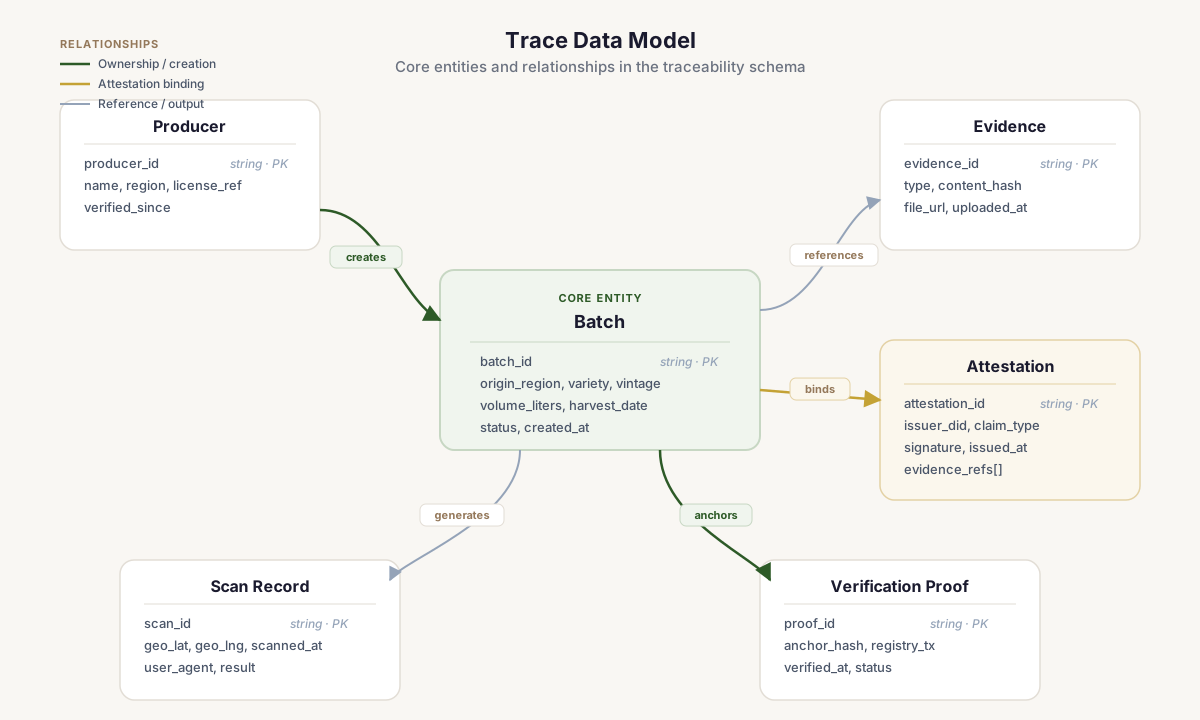
Credibility comes from stratification. A producer self-reports harvest details. A lab signs test results. An authority attests GI conformity. Collapsing all of that into one "verified" badge would be dishonest. Trust tiers make the epistemic weight of each claim visible. (National Wine Agency of Georgia, 2020; WIPO, 1999)
Equation 4
Attestation-weight score
Variable glossary
- · Composite trust score for a batch or claim bundle.
- · Weight assigned to attestation class i based on issuer credibility and governance rules.
- · Observed attestation validity or presence for issuer class i.
Interpretation
The score is not a truth oracle. It is a way to summarize whether a claim is only self-reported or supported by stronger, independent attestations such as labs or authorities. (Banstola et al., 2025)
Section evidence: National Wine Agency of Georgia, 2020 · Banstola et al., 2025 · Sakpatenti, 2018a · WIPO, 1999
Architecture: Hybrid Storage and Public Commitments
Trace uses a hybrid architecture. Operational data (structured records, evidence files, access control) lives in the application layer. Cryptographic commitments, issuer actions, and verification checkpoints live in a minimal public registry that no single operator can silently rewrite. (Paliwal et al., 2021)
Equation 1
Trace commitment
Variable glossary
- · Batch content hash anchored or stored for verification.
- · Deterministic serialization of the batch fields that define provenance at registration time.
Interpretation
The batch hash is a compact commitment to the important provenance fields. If any of those fields change later, the verifier recomputes a different hash and the mismatch becomes visible. (Paliwal et al., 2021)
Equation 2
Attestation commitment
Variable glossary
- · Attestation hash stored as the public commitment.
- · Identifier of the batch being attested.
- · Credentialed issuer or signer identity.
- · The claim class, such as origin verification or lab result.
- · Structured evidence payload supporting the claim.
Interpretation
Trace does not anchor raw evidence on-chain. It anchors a cryptographic commitment that links the issuer, the claim type, and the structured payload into one verifiable record. (Paliwal et al., 2021)
Equation 3
Verification predicate
Variable glossary
- · Binary verification result for the batch record.
- · Indicator function equal to 1 when the stated condition is true.
- · Product over all attestations associated with the batch.
Interpretation
A batch verifies only when the off-chain batch hash matches the on-chain commitment and every attestation hash also matches its recorded commitment. (Paliwal et al., 2021)
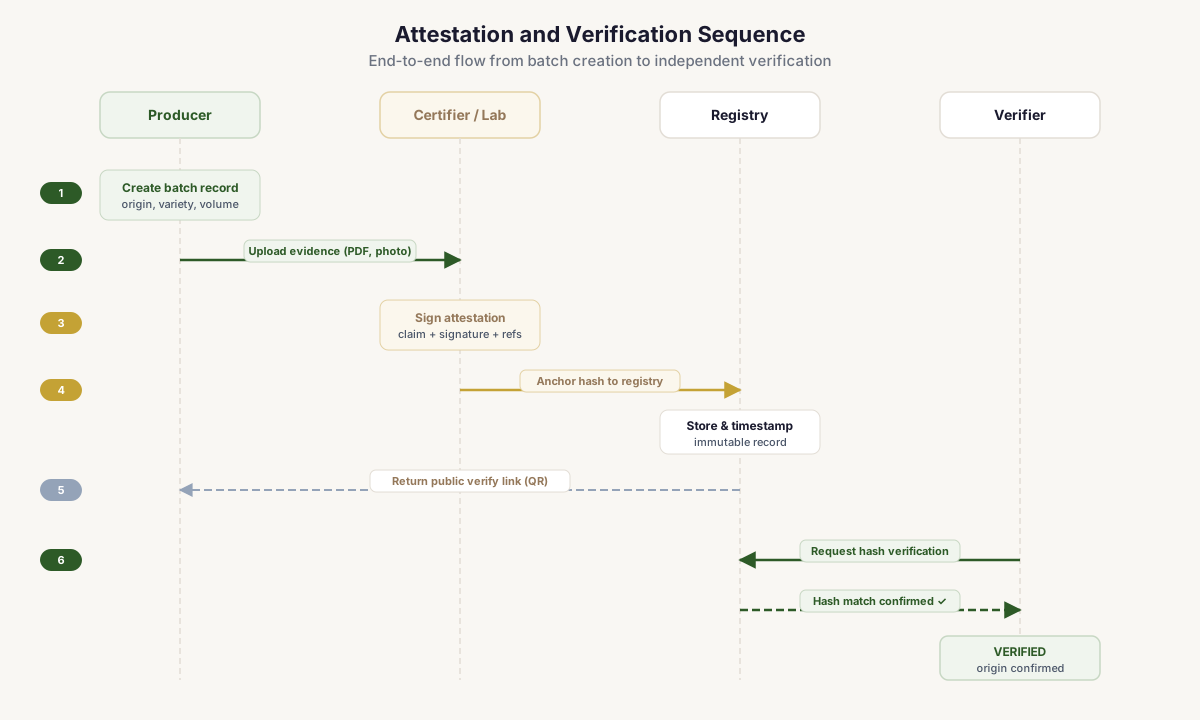
This avoids two common design failures. Making blockchain the product raises complexity without improving producer outcomes. Keeping everything in a proprietary database kills verification and interoperability. On-chain state handles public commitments. Off-chain data handles operations. Each does what it's good at. (Paliwal et al., 2021; Digital Public Goods Alliance, 2025)
Section evidence: Paliwal et al., 2021 · Digital Public Goods Alliance, 2025
Threats and Tradeoffs
Trace is not a truth machine. Garbage-in is a real risk when only one actor writes decisive claims. The model mitigates this with multiple attestors, source-specific trust tiers, and public verification, not by pretending the system sees everything, but by making visible who said what and when. (Banstola et al., 2025)
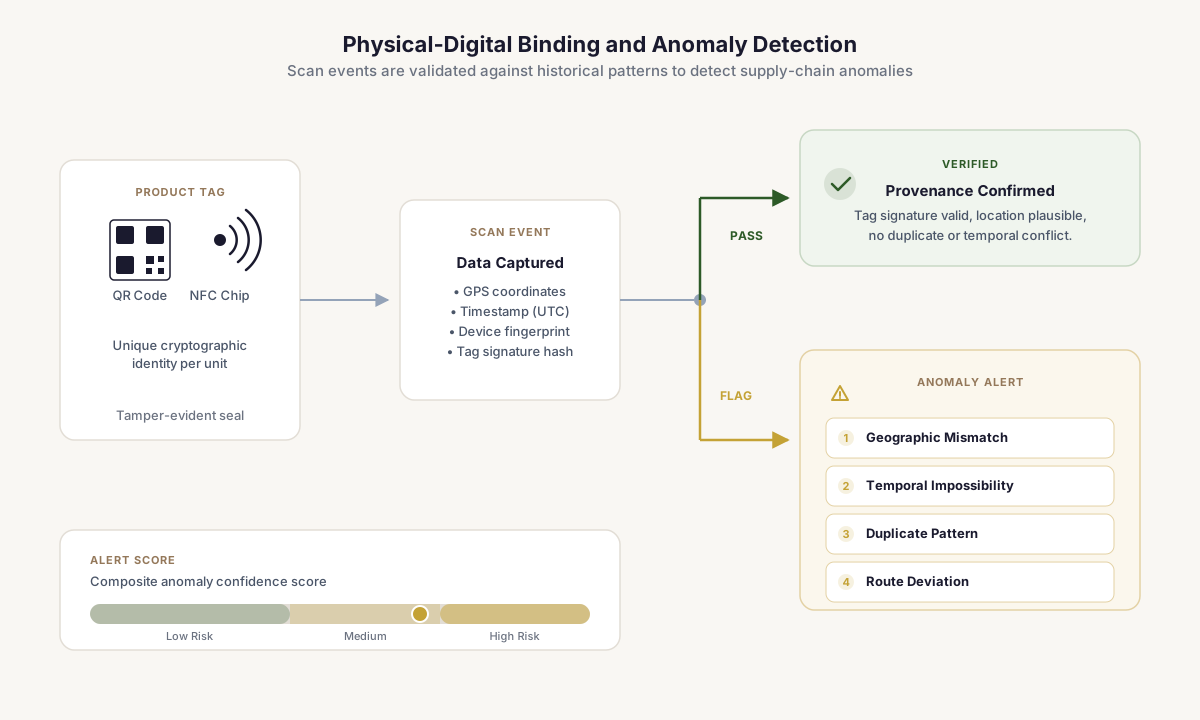
QR codes work for low-friction transparency. They don't solve high-adversary anti-counterfeit problems alone. For higher-risk exports, the pattern is QR-first onboarding, secure NFC for selected SKUs, and anomaly analytics that flag impossible behavior, such as the same tag scanned in two countries the same week, or hundreds of scans from a warehouse that shipped ten cases. (Sakpatenti, 2018a; OECD & EUIPO, 2025)
Equation 5
Scan anomaly score
Variable glossary
- · Risk score associated with a specific QR or NFC tag.
- · Geographic inconsistency feature, such as impossible distance between scans.
- · Temporal inconsistency feature.
- · Duplicate or repeated scan pattern intensity.
- · Mismatch between observed and expected distribution path.
Interpretation
Anomaly scoring does not prove fraud by itself. It helps brand owners, importers, and authorities prioritize which suspicious events deserve review. (Sakpatenti, 2018a; OECD & EUIPO, 2025)
Section evidence: Sakpatenti, 2018a · OECD & EUIPO, 2025 · Banstola et al., 2025
Shield: Parametric Resilience and Audited Response
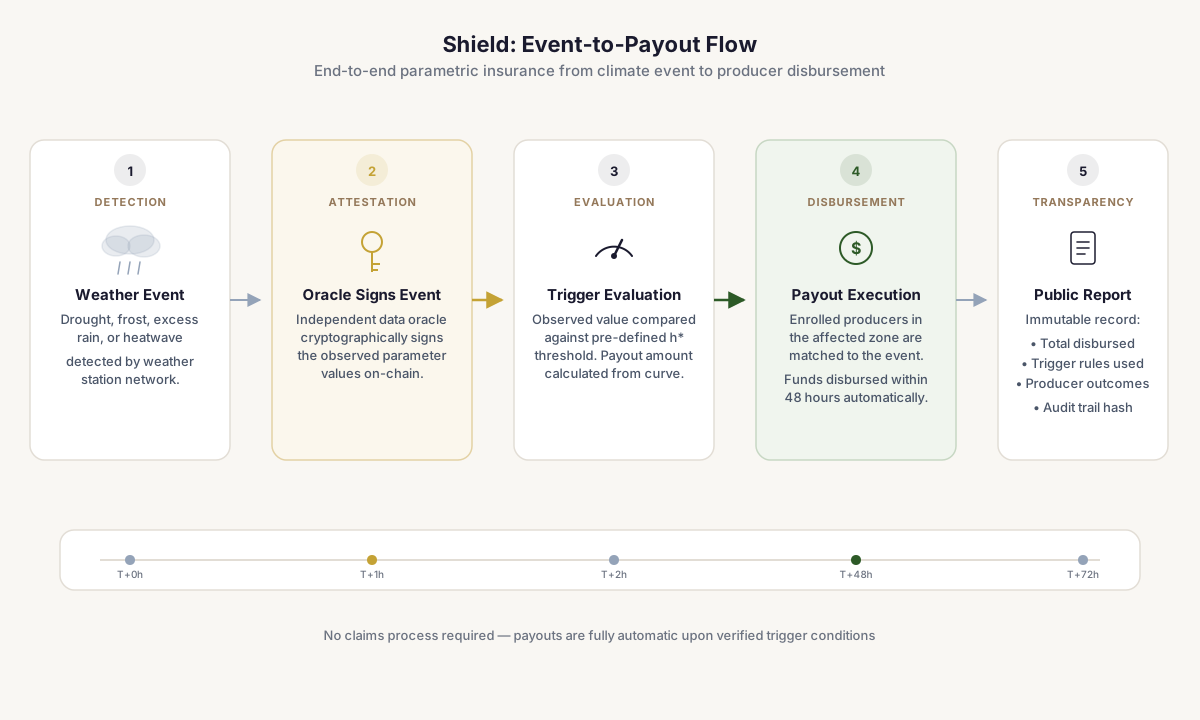
Shield is planned, not launched. It turns documented climate events into faster, more auditable support decisions by reusing the enrollment, evidence, and verification logic that Trace already establishes. (MEPA, 2023; World Bank, 2022)
Equation 6
Shield trigger indicator
Variable glossary
- · Observed hail or hazard intensity for the covered area.
- · Observed frost condition indicator.
- · Minimum temperature in the relevant event window.
- · Governance-approved thresholds for the program.
Interpretation
Shield uses transparent threshold rules so participants know in advance what event levels are sufficient to move a case into the payout workflow. (World Bank, 2022; World Bank, 2019)
Equation 7
Illustrative payout rule
Variable glossary
- · Payout for participant i.
- · Program cap for a single enrolled unit.
- · Covered area or another exposure measure for participant i.
- · Weights for hail, frost, and drought index components.
- · A drought or dryness indicator where relevant to the program.
Interpretation
The formula illustrates a transparent structure rather than a final actuarial contract. It shows how exposure, threshold exceedance, and capped support can be combined without hiding logic inside manual discretion. (World Bank, 2022; World Bank, 2019)
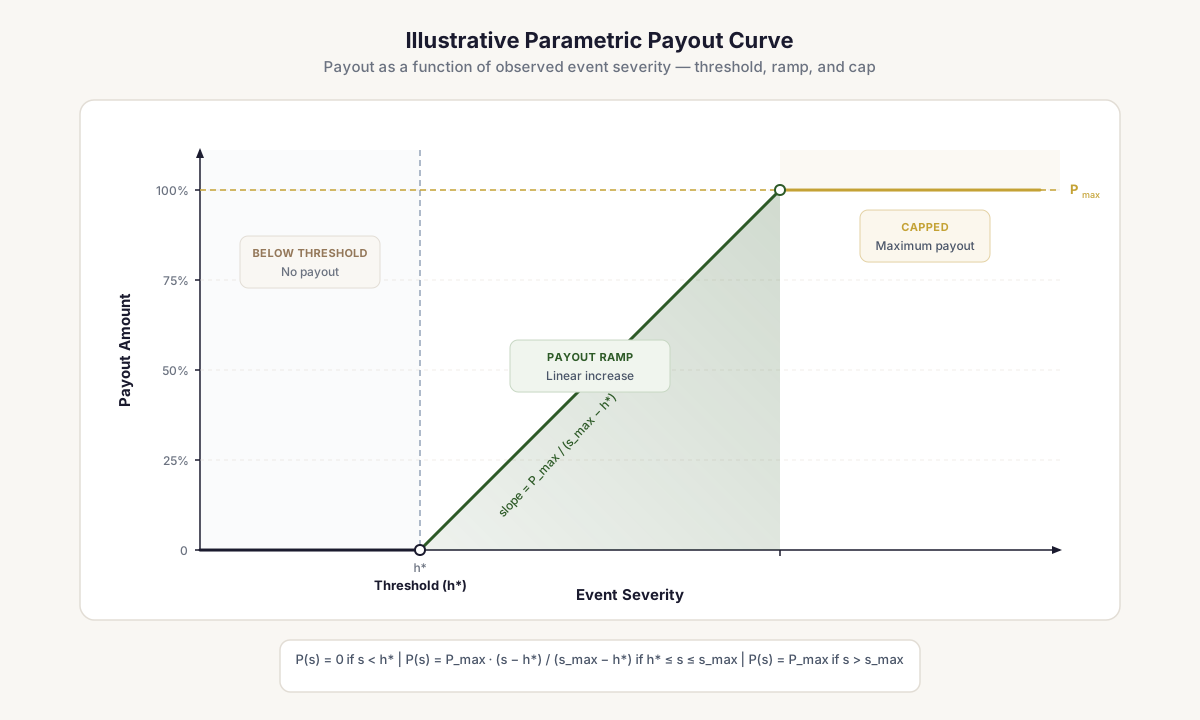
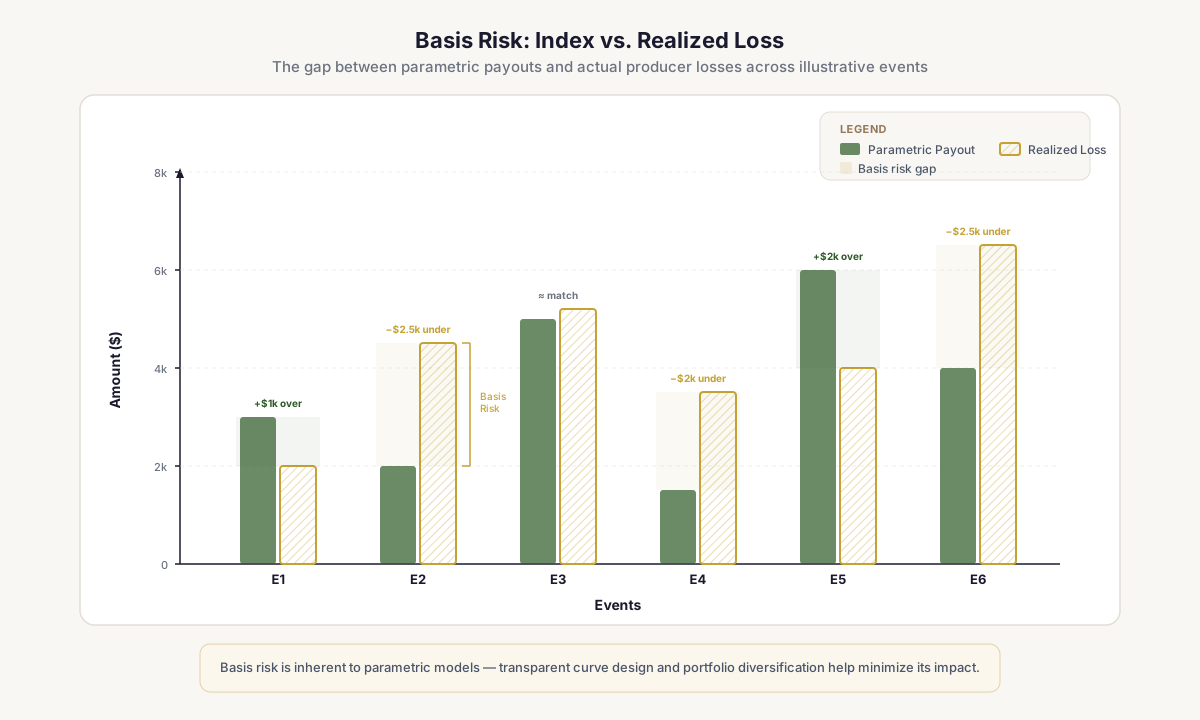
The hard problem is basis risk, the gap between what a parametric index says happened and what a producer actually lost. A fast index-based response improves speed and auditability, but it can diverge from real local damage. Shield should start as rapid relief with clear thresholds, published rules, and fallback review paths. Not as an insurance market replacement. (World Bank, 2022; World Bank, 2019; Moriondo et al., 2024)
Equation 8
Basis risk measure
Variable glossary
- · Expected basis risk over observed cases.
- · Realized loss for participant i.
- · Program payout for participant i.
- · Expectation across cases or seasons.
Interpretation
Basis risk is the expected gap between real damage and parametric payout. Shield should make that gap visible and governable rather than pretending it disappears. (World Bank, 2022; World Bank, 2019)
Section evidence: MEPA, 2023 · Rural Development Agency, 2025 · World Bank, 2022 · World Bank, 2019 · Moriondo et al., 2024
Governance and Safeguards
Provenance infrastructure can't be governed as a black box. If Terroir supports producers, agencies, certifiers, and donor-backed programs, its schemas, verification logic, and upgrade path need to stay inspectable and contestable. Open-source licensing and DPG-style governance are structural requirements, not a branding exercise. (Digital Public Goods Alliance, 2025; UNDP, 2024)
GI protection is a legal and institutional matter. Terroir accelerates evidence handling and verification, but it doesn't imply that a technical record replaces protected-designation law or formal enforcement. Funding-sensitive audiences also need strict separation between rural-livelihood infrastructure and anything that looks like product promotion. (WIPO, 1999; WIPO, 2025; UNICEF USA, 2026)
Built-in safeguards
- No personal farmer data or beneficiary-identifying financial details published on-chain.
- No youth-targeted marketing, gamified features, or product-promotion mechanics in the core system.
- Child-labor and safe-work commitments handled as governance attestations, not promotional badges.
- Shield publishes totals, event logic, and rule execution without exposing sensitive participant records.
Section evidence: WIPO, 1999 · WIPO, 2025 · UNICEF USA, 2026 · Digital Public Goods Alliance, 2025 · UNDP, 2024
Rollout
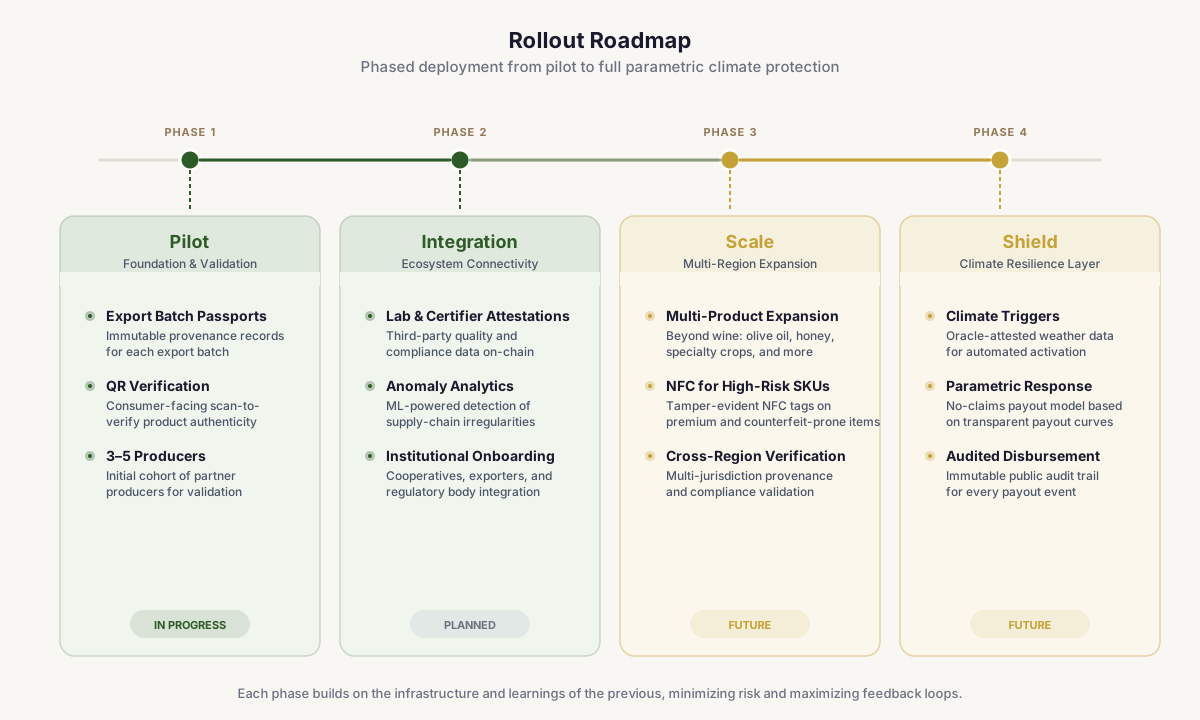
Start with one exporter-facing Trace pilot on a small set of high-value SKUs. Prove that batch registration, issuer attestations, and public verification work inside real production and export workflows without adding unacceptable friction. (National Wine Agency of Georgia, 2025)
Once the evidence model stabilizes, bring in institutional integrations (labs, certifiers, associations, agencies) that contribute stronger attestations. Only then pilot Shield in a bounded climate-response program. Resilience logic depends on trusted enrollment, traceable evidence, and transparent rules. Rushing it creates exactly the disputes it's designed to prevent. (Rural Development Agency, 2025; Digital Public Goods Alliance, 2025)
Section evidence: National Wine Agency of Georgia, 2025 · Rural Development Agency, 2025 · Digital Public Goods Alliance, 2025
Conclusion
Terroir treats provenance, certification, and climate response as parts of one shared evidence system rather than disconnected compliance tasks. The position is technically defensible, economically relevant, and well matched to how origin-sensitive agricultural supply chains actually break. (National Wine Agency of Georgia, 2025; Banstola et al., 2025)
Trace starts where the pain is sharpest: cross-border trust failure for products whose value depends on verified origin. Shield extends the same primitives into climate resilience without pretending governance disappears into code. The architecture is specific enough to ship in one geography and general enough to scale across product categories. (Digital Public Goods Alliance, 2025; UNDP, 2024; World Bank, 2022)
Success should be measured at the operational level, not by technical throughput. Share of export batches with verified passports. Median time for a producer to register a batch. Duplicate-scan alert rates and resolution speed. Once Shield ships, median days from climate trigger to payout decision. These tell you whether the system is actually reducing friction for the people it claims to serve. (Banstola et al., 2025; World Bank, 2022; Digital Public Goods Alliance, 2025)
Section evidence: National Wine Agency of Georgia, 2025 · Digital Public Goods Alliance, 2025 · UNDP, 2024 · Banstola et al., 2025 · World Bank, 2022
References
- National Wine Agency of Georgia. (2025, January 20). Record revenues from wine and spirits exports. https://wine.gov.ge/En/News/38181 Open source
- National Wine Agency of Georgia. (2023, June 6). The 8,000-year-old uninterrupted tradition of wine production in Georgia. https://wine.gov.ge/En/News/37074 Open source
- UNESCO. (2013). Decision of the Intergovernmental Committee: Traditional Georgian winemaking method in qvevri. https://ich.unesco.org/en/decisions/8.COM/8.13 Open source
- National Intellectual Property Center of Georgia (Sakpatenti). (2018, August 9). Counterfeit wine labeled with appellation of origin 'Kindzmarauli' revealed in Russia. https://www.sakpatenti.gov.ge/en/news/5309/ Open source
- National Wine Agency of Georgia. (2018, December 31). Counterfeit Georgian wine batch removed from sale in Ukraine. https://wine.gov.ge/En/News/25735 Open source
- World Intellectual Property Organization. (1999). Law of Georgia on appellations of origin and geographical indications of goods. WIPO Lex. https://www.wipo.int/wipolex/en/text/217274 Open source
- World Intellectual Property Organization. (2025, February 25). Georgia strengthens the protection of its geographical indications. https://www.wipo.int/web/wipo-magazine/articles/georgia-strengthens-the-protection-of-its-geographical-indications-67406 Open source
- Organisation for Economic Co-operation and Development. (2022). Global trade in fakes: A worrying threat. OECD Publishing. https://www.oecd.org/en/publications/global-trade-in-fakes-a-worrying-threat_74c81154-en.html Open source
- Organisation for Economic Co-operation and Development, & European Union Intellectual Property Office. (2025). Mapping global trade in fakes 2025: Global trends and enforcement challenges. OECD Publishing. https://doi.org/10.1787/94d3b29f-en Open source
- National Wine Agency of Georgia. (2020). Annual report 2020. https://wine.gov.ge/En/Files/Download/12996 Open source
- Ministry of Environmental Protection and Agriculture of Georgia. (2023, November 17). More than 5,800 vineyard owners received state assistance after hail damage in Kakheti. https://mepa.gov.ge/Ge/News/Details/21399 Open source
- Rural Development Agency. (2025). Agroinsurance. https://www.rda.gov.ge/en/projects/Agroinsurance Open source
- World Bank. (2022). Index insurance for agricultural resilience: Promises, challenges and solutions. https://openknowledge.worldbank.org/entities/publication/1be2d7c8-9b22-5753-bf07-4a0df44bc09d Open source
- World Bank. (2019). Is index insurance a viable solution for disaster risk financing in agriculture? https://openknowledge.worldbank.org/entities/publication/e6cc66f4-a4b3-5355-bded-ef17f4f9d4b3 Open source
- Moriondo, M., Ferrise, R., Dibari, C., and colleagues. (2024). Climate resilience pathways for European wine regions. Nature Food, 5, 551-562. https://www.nature.com/articles/s43016-024-00988-w Open source
- Paliwal, V., Chandra, S., & Sharma, S. (2021). Blockchain technology for sustainable supply chain management: A systematic literature review and a classification framework. Trends in Food Science & Technology, 109, 637-660. https://doi.org/10.1016/j.tifs.2021.08.012 Open source
- Banstola, A., Ghimeray, A. K., & Ahmad, T. (2025). Do farmers participate in traceability systems? A systematic review and future directions. Journal of the Science of Food and Agriculture, 105(4), 2036-2049. https://onlinelibrary.wiley.com/doi/10.1111/joss.70034 Open source
- Digital Public Goods Alliance. (2025). DPG Standard. https://www.digitalpublicgoods.net/standard/ Open source
- United Nations Development Programme. (2024). Default to open. https://www.undp.org/publications/default-open Open source
- UNICEF Office of Innovation. (2026). Venture Fund. https://www.unicefinnovationfund.org/ Open source
- UNICEF USA. (2026). Gift acceptance policy. https://www.unicefusa.org/about/finances-and-accountability/gift-acceptance-policy Open source
Appendix: Formula Notes and Implementation Glossary
CanonicalJSON is a deterministic serialization rule: sort keys, strip whitespace, render values consistently before hashing. The point is reproducibility across software stacks. (Paliwal et al., 2021)
In Shield, the symbols h*, f*, and t* are governance-approved threshold values, not secret actuarial parameters. Publishing them is part of the transparency model. The same applies to payout caps, program windows, and trigger-classification logic. (World Bank, 2022; World Bank, 2019)
Trust tiers should display as readable labels (Self-attested, Lab-attested, Authority-attested), not as a single undifferentiated verified badge. That distinction matters for institutional adoption and public honesty. (Banstola et al., 2025; National Wine Agency of Georgia, 2020)